Thursday, 31 May 2012

Toronto Youth Shorts Film Festival - Part 2


Continuing where I left off in Part 1, here's the rest of my preview of the Toronto Youth Shorts Film Festival (taking place on Saturday June 2nd at Innis Town Hall) which consists of three more documentaries and two further fictional films.


First up is "A Slice Of Life", an awfully charming 15 minute short about an Ontario pie contest and the filmmaker's attempt to enter it. In the short running time, we not only see writer/driector Emily Powell learn how to make a pie (from some of the experts that run the contest), create it and then bring it to the big competition, but we also meet several other contestants and hear about past winners. The occasional pie-making secret is even thrown in for good measure (for example, adding a touch of liqueur to your filling). It's shot very typically, so you won't be getting any groundbreaking visual flair here, but the film doesn't really require any. It would intrude and divert away from the well-told, engaging story. One of my favourites for sure.
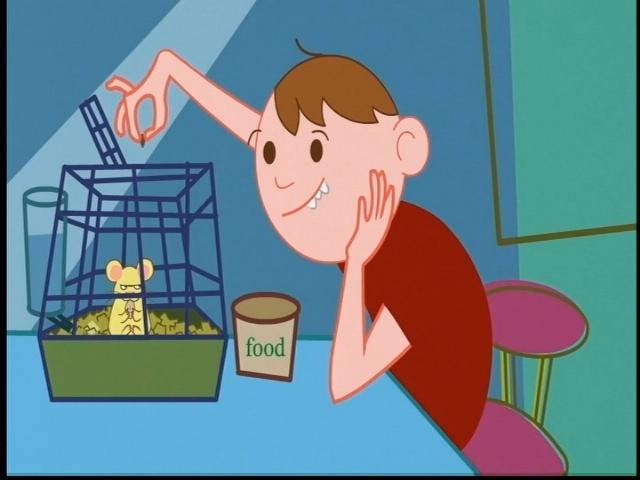


The second film is focused on the stories of pet owners, their fond memories of their pets and how they felt when they died. Though this could easily have been awash with sentimentality as the owners relate their stories, it completely avoids this by recreating the experiences with actors, animation and puppets. Each of the stories is just a couple of minutes long, so the cute factor doesn't wear thin and the bonds that the people felt with these animals still come across. In some cases the owners had not had the animals for very long, but still grew quite attached. The title of the film ("Our Best Friends") is as close to gushiness as the 10 minute running time gets.


"Dolime Dilemna - Waterproof?" is a far more conventional approach to its subject, but certainly no less effective. The city of Guelph Ontario depends on an underground aquifer for their water supply, but the local quarry is slowly eroding the aquitard protective layer. I know this because the short does a pretty good job of laying out the geological terms that are relevant as well as the possible threat to Guelph's water. While the construction company's representative minimizes the danger and tries to emphasize the NIMBY syndrome (Not In MY BackYard) as the excuse for those who argue against the quarry continuing to dig, the rest of the film calmly lays out the issues (through professors, scientists and the mayor of the city). The danger is that when they stop pumping, the surface water will mix with the underground supply and the contamination will begin. Unfortunately, since the danger is not immediate (ie. there are no results of testing the water that indicate contamination has occurred), it's very hard to get government attention. The film has its biases obviously, but its rational, straightforward approach helps to not only get its specific point across, but also allows it to expand to a wider issue - everyone assumes that our fresh water supply is unending.


The last two films are dramatic works of fiction and unfortunately suffer in comparison to their documentary counterparts. Both are set in very real worlds and depend on natural sounding characters, but neither quite hits the right tone. Granted, these are very small films, so the quality of the acting is actually quite fine for the scale, but both tend to go for the big emotion inside their scripts. I'm glad they aimed high, but it feels like they overshot. Having said that, the construction of both films is solid. "Heart Of Perception" shows us the story of a homeless man and pretty young woman who brings him food and money. It tends toward the over-dramatic (or over-melodramatic due to the overuse of tinkling piano and plucking guitar), but it doesn't immediately tell you the relationship between the two so leaves a bit of mystery. He buys her an old camera on the street and it appears to create a bit of a spark in her as they take photos of each other. Because of where it winds up, it felt like it needed much more context and back story, but it's a fine effort for a two character story.


"Breaking Over Me" is also a bit too self-consciously serious with a pretty blunt script (and another plinking piano score that tries to handle all the heavy lifting of the emotion). A teenage girl attends the funeral of her estranged father and sees his new family. He deserted her and her Mom when she was young ("Did you hear about Dad? I heard he passed away." "Probably for the best. World's better without him."), so she doesn't mention to her mother that she actually went to the funeral. However, she starts going to the funeral home and sitting in on random services. One day she walks into one of them and only one other person is in attendance. She lies about knowing the man's deceased wife and they begin to chat since each has a need to talk to the other. The dialogue is still somewhat forced ("So, what did you do?" "Before I got old?") and the emotional climax isn't quite as effective as it could be, but it's quite the chunk to attempt in a short piece. There's a lot to be said for the effort - not just the execution, but the goal of reaching for a larger idea.

So if you're looking for some of that kind if inspiration, grab yourself some tickets for the Saturday June 2nd screenings from the Toronto Youth Shorts Film Festival web site.

Tuesday, 29 May 2012

Blind Spot #5 - "Pather Panchali" & "Nanook Of The North"


It's been a good solid two decades that I've been wanting to see Satyajit Ray's famed "Apu trilogy". As my interest in film started to poke its nose into various realms, I continued to see the trilogy (and particularly the first film from it - "Pather Panchali") get mentioned in discussions of foreign cinema and also land on various lists. Sometime later, I met a lovely young woman who gave me some deeper background on not only Ray's influence within the Bengali community, but also the rather wide range of artists that particular Indian region has generated. Just for that, I married her. Well, OK, there were a few thousand other reasons too, but it sure didn't hurt. My wife had always loved the gorgeous score from "Pather Panchali" (composed and performed by Ravi Shankar) and we played much of it during our wedding (mixed in with French Canadian folk music, Charles Mingus and King Crimson - yeah, it was a good day). Still, though, I had not managed to see the film. I missed it whenever it showed at the local Cinematheque and there were no Region 1 releases at the time. When one finally came out, word was that the transfer was terrible. So I put it off. I've been meaning to hunt down the Region 2 version ever since I bought my region-free player, but simply haven't done so.


Similarly, Robert J. Flaherty's seminal documentary "Nanook Of The North" has been on the to-watch list for years as well. It's even more surprising that I haven't sat down to see it until now - it's readily available on Criterion, it's under 80 minutes long, it's one of the earliest feature length documentaries and it's also one of the first examples of a filmmaker playing with the truth on screen to get to a "bigger" truth. Herzog may be known for that today, but Flaherty was a good half-century ahead of him. It also provides footage from the North of my own country that shows a lifestyle that is completely alien to my own. So why haven't I seen it? I don't know, but isn't that why I'm doing this Blind Spot series?


Once again, my pairing of films works out quite nicely...The stories are vastly different of course, but beyond the obvious pairing of foreign cultures documented in academy ratio B&W images, both films are wonderful at creating a sense of place. Not just the specific environment where the story is set, but also the pace of daily life, the chores, the family interactions and the difficulty of doing things that our modern Western culture takes for granted. And even in the compromised transfers of both DVDs, the cinematography - especially of the natural surroundings - is breathtaking. Whether it's the floes of ice, a steaming train through a wheat field, a lone cabin pitched against the huge Northern sky or reflected plant life in the dusk of a warm humid evening, these films cry out for pristine looking versions. I doubt that too much more could be done for Nanook, but Ray's films need far better treatment. Word is that Criterion might release the trilogy at some point (they provided a splendid version of Ray's "The Music Room"), so let's hope that many others can start filling in this particular blind spot in the near future.


After viewing "Pather Panchali", I'll be closing off on the rest of the trilogy shortly. It's truly wonderful. There are certain filmmakers that have an innate ability to convey humanity in their characters. Kore-eda and Kaurismaki are two names that spring to mind (at least as far as current directors go), but you can bet Ray will be on the list now as well. It's not just the range of emotion, but the honest way it comes across. At the start of the film, the young boy for whom the trilogy is named hasn't even been born yet, but he is on his way. We meet Apu's Mom and sister Durga as they eke out a living while being "allowed" to stay within the confines of the family orchard. There's some history within the family as to proper ownership, but Apu's Dad isn't concerned - in his mind all you need is two good meals a day and new clothes twice a year. What more could anyone want? His focus is being an artist - his family has always been filled with writers and scholars and he has great hopes of writing a new style of play for the bands of travelling players that roam the countryside. Until then, he must go off looking for work on a regular basis and bring back his earnings to his family. His positive outlook is contrasted sharply with his wife who has to be worried about their daily existence, their reputation, how she is viewed as a pregnant woman and how to eventually marry off Durga (and what they would get in return). A great deal of effort is put into how the family is perceived and where they are supposed to fit within society - not even the larger society, but just the small one around them. Even the father isn't immune - once Apu is born, he wants to spend some of the little money they have to celebrate and show off to everyone in the community. This becomes a bigger issue when Durga is accused of stealing the bracelet of one of the young girls at the main house. Durga has been caught stealing food before and her Aunt sees the whole family as a bunch of thieves. Though Durga is defended by her mother, she later gets literally thrown out of the house until the end of day. Hardly fair in Durga's mind, since Apu (probably 6 or 7 at this stage) has stolen toys himself, but never gets punished. It's a clear demarcation between males and females in this portion of society - as much as many mothers aren't happy with their own lots in life, they end up forcing the exact same standards and rules that hurt them onto their own daughters. Though wrapped around these central themes, much of the film shows the simple life of Durga, Apu and their Mom. The children have free reign over the forest and beautiful fields as they play between chores. While the cinematography shows the grandness of their location, we also get a closer look at nature - bugs, dragonflies, rain falling on the leaves of the forest - to emphasize how closely these people interact with it even within their own homes.


Of course, Nanook himself might scoff at their living conditions. He doesn't just live with nature, he has to fight with it every single day. Flaherty originally was part of an expedition to the large region East of Hudson's Bay and was asked to prospect it for possible growth in the areas of railway and mining. As Flaherty met the Inuit people who lived there, he realized that their way of life was slowly coming to an end - and so he began to bring up his cameras to document what he could. Since much of his original footage was lost and because he initially had a narrative feature in mind, Flaherty recreated many of the scenarios we see in the film. What we end up seeing is somewhat like a greatest hits of the Eskimo lifestyle: transporting the "family" via kayaks, building an igloo, capturing, killing and eating seals, etc. It's all quite simply shot and quite revealing - especially the more intimate scenes with Nanook's "family". Perhaps you've noticed the use of quotations around "family" - as it turns out, that's not Nanook's wife or children in the film. They are simply other natives of the region who were brought in to film these different events - many of which weren't even activities they did on a regular basis anymore. However, Flaherty felt it important to document the way that they did actually live - if Nanook doesn't actually hunt in exactly those methods anymore, he certainly used to do it and has the kind of skills that were required. The film even states right from the intertitles at the start that Nanook is essentially a composite of the people Flaherty met during his many years in the North. If he occasionally condescends a bit to them (calling them "happy-go-lucky", creating a scene where Nanook looks at a long playing record and tries to bite it with his teeth), there is an obvious appreciation of the people and the life. Yes, the seal capture and the kayak transporting (where members of Nanook's family start popping out of the kayak like clowns from a tiny car) were essentially faked, but the overall intent of the film is to provide the feeling of what it was like to live in this cold and often hostile environment. From that perspective, the film is a complete success. It doesn't just show the hunting activities or the building of shelter (though I had never thought they actually used ice as a window), but also many of the smaller details. For example, the snow is sometimes as dry as sand, so the runners on a sled have to be glazed with water before it can actually slide. That same sled is typically stored on top of the igloo at night in order to prevent the dogs from chewing the seal hide that binds it together. Flaherty even shows the minute details like the spit cleaning of a baby and the nighttime rituals.


Though I'll never get a sequel to Nanook (the story is that Nanook - or the person playing the character of Nanook - actually died during final prep of the film), I'd love to see how their lives developed as the regions around them did. If their old ways of life died out, were they able to adapt? Did life become easier or harder for them? Flaherty's film doesn't just raise these questions, it makes you very much want to know the answers. By the end of the film, you even have feelings for the sled dogs (the shot of the dogs huddling at night in the cold, lashing winds is the perfect way to show the environment). Fortunately, I can at least follow up with Apu in two further films to see what wonders and heartbreak are in store for him while plunging myself further into a world I never knew much about. It's been a bit of blind spot one might say...

Toronto Youth Shorts Film Festival - Part 1


It's best if I just take the description of the Toronto Youth Shorts Film Festival (starting this Saturday June 2nd) straight from their web site:

"The Toronto Youth Shorts Film Festival is a volunteer-run not-for-profit initiative that works to bring a series of events for local young and emerging filmmakers in the Greater Toronto Area to showcase their talent and creations to an audience of independent film lovers."

It's more than just a showcase though...It's a forum for the filmmakers to meet with industry people, share ideas and - most importantly of all - get feedback from experienced filmmakers and their peers. In its fourth year, the festival appears to be growing and gaining steam. Given the overall quality of the sample of films I had a chance to see, it feels like the staff of the festival are getting the word out to some of the best young local talent. You can't help but want to fast forward 5-6 years into the future to see what these "kids" (not to offend any of the filmmakers, but I'm way older than all of ya...) will have created by then.


The three animated films I saw (all between 1-2 minutes) are all wonderful, charming and feel like much more mature work. The stories are somewhat simple and straightforward, but each has a distinctive feel to it and a real sense of creativity. The tools of today may make it easy for "anyone" to create, but they don't necessarily provide the imagination and inspiration these filmmakers all had. "Blind Luck" was the first of the three and it put a lift in my day straight away. There's just something about an animated character (even a dog) that, when drawn with certain details and attributes, can immediately make you smile. A working dog leading his blind owner across a street is distracted by a bright red ball and must choose between his instincts and his training. The gags and outcome are well realized, but that dog (and all his subtle expressions and movements) is quite fantastic.


The second film entitled "Vernal Equinox" depicts, as you might expect, the arrival of Spring - though not without a fight. The Winter wolf is not ready to cede its time, but a helpful warrior is there to do battle with it to allow Spring to take its rightful place. Using imagery from fantasy, manga and probably video games, the mini-epic is over and done with in under a minute-and-a-half, but it leaves a lasting impression (if you can look past the image of a scantily clad feminine Spring needing the male warrior's help). The last of the three ("Amare") is the simplest in both design and colouring, but is probably the most charming - partially because of that simplicity, but also due to its story of a woman scorned and the man who looks past all of that to her inner true self. An idea simply, but quite lovingly, expressed.


If the live action films (both fictional and documentary) don't quite live up to the animated ones, it's understandable. Typically running closer to 15 minutes each, the live action films tend to feel padded or like they have extended their reach a bit too far from their original ideas. Having said that, they tend to share a commonality: good solid ideas. I'll mention three of the eight I saw and hopefully follow up with a second post covering the rest before the festival starts on Friday. The first ("Backwards Rider") is a documentary about a local artist/environmentalist named Lesley Slowley. His claim to fame is riding his bike (at regular speed) backwards on the streets of Toronto (glimpsing behind him every couple of seconds to see where he's going). Given Lesley's recycled paper art, involvement with the Occupy Toronto movement and rather obvious dislike of rules, he definitely looks backward to move forward as a general rule...The film loses its sympathy with him, though, during an encounter with the police. Whatever your opinion is of his views and politics (e.g. whether you agree that the police are correct to cite him for dangerous riding OR that Lesley is correct to point out the pollution caused by their cars), it's all too obvious that he isn't interested in having the discussion as he shows no attempt to understand another viewpoint. It paints Lesley as less of a complicated person (not to mention less interesting) than I originally thought he might be.


The next short called "Prolepsis" has one of the more interesting frameworks and central concepts, but unfortunately ended up being one of my least favourites. One example of the definition of the title is "the anachronistic representation of something as existing before its proper or historical time" which corresponds nicely with the faux-doc's plot point of a news report from the future somehow slipping into a standard news feed. As the government works the angles and the public frames it according to their own cultures, dissent arises, riots break out, etc. The film is patched together with TV news footage from various actual news networks, but also has some of its own "interviews" and footage near a barricade. A common issue with these type of films is trying to make the interviews appear natural and unscripted - an issue that certainly stands out here. As well, it exceeds its required running time by about double what it really needs, tends to stay with its interview subjects far too long and ends up restating numerous points. However, it's an interesting concept that shows promise.

The last is "Loss Together", a story built around the idea of "friendships" in the office and online that aren't really built upon anything of consequence. On a single day, the colleagues in a non-descript office have to deal with the death of a co-worker that no one really knows (except for the occasional Facebook status update) while preparing to go to a pub gathering in the evening for another co-worker's birthday (again, one that is mostly unknown to everyone). It's never quite as funny or dark or biting as it could have been with a stronger script and some needed editing, but it's still quite well constructed and has the makings of something far stronger.

The festival is screening its 31 films in three separate blocks (mixing animation, documentary and fiction into each one) on Saturday June 2nd. Check their web site for details on tickets and times. It's a worthwhile event that should provide bursts of inspiration for any attendee.

Monday, 28 May 2012

Coincidental Parallels - "Eternal Sunshine Of The Spotless Mind" and "Leningrad Cowboys Meet Moses"


"Oh my darling, oh my darling,
Oh my daaaahrling Clementine"


Of course, I expected to hear this little snippet of the old folk ballad during my most recent viewing of "Eternal Sunshine Of The Spotless Mind" (as I showed it to my son for the first time - a viewing filled with comments like "Hold on...wait...so...", exclamations like "Oh, I get it!" and then further comments like "Hold on...wait...so..."), but I didn't expect to hear it again during the very next film I watched: Aki Kaurismaki's bordering on nonsensical and slightly deranged Finnish/English/Mexican/Russian hybrid Leningrad Cowboys Meet Moses. There it was, though, in the very final scene before credits, being sung by the old man who twice tried to steal the nose of the Statue Of Liberty from the bus of the Leningrad Cowboys (I warned you - clear and straightforward narrative this is not).

No offense Andre Wilms, but I'll take Kate Winslet's version over yours any day...

Now There's Something You Don't See Everyday... #6


Leningrad Cowboys Meet Moses (1994 - Aki Kaurismaki)

Tuesday, 15 May 2012

And People Wonder Why I Love Seijun Suzuki?


An ordinary director would say, "This isn't realistic. It's absurd." With him, though, even if I presented a somewhat unusual idea, he'd take it apart and put it back together in an interesting way.

Production designer Takeo Kimura about director Seijun Suzuki when discussing his 1964 film "Gate Of Flesh".


How do you not love this guy?

Monday, 14 May 2012

Hot Docs 2012 - "Despite The Gods"


"They break for tea!"

The incredulous tone in Jennifer Lynch's voice when she says the above is one of the many clues that she really wasn't prepared for India. Not as a tourist and certainly not as a film director. When she accepted an offer to take the helm of the Indian production of "Hisss" (basic plot - snake turns into woman and then turns back into snake), not only did she not expect those frequent breaks on set, the very rough concept of time held by most, concerns about script sections being sacrilegious and a far-reaching lighting technicians' strike, but she certainly didn't think the entire control and final edit of the picture would be wrested from her. Penny Vozniak's "Despite The Gods" started as a simple behind the scenes EPK, but as Lynch's own fortunes began to fall, the story behind the film (and the footage Vozniak was capturing) became far more interesting.

Lynch had intentions of creating an examination of sensual female beauty. Her producers had a different concept in mind - pure exploitation. There's no doubt the concept lends itself to the latter, but Lynch's approach to several scenes, some careful shot-making and an emphasis on practical effects makes you believe she could actually pull off the former. She has a few obstacles to overcome though - not the least being her unfamiliarity with the customs and ways of doing business in India. Fortunately, she has a pretty great crew as evidenced by her assistant directors, actors and other various people (my favourite being the caterer who helps out with sound effects). Complicating things further is Lynch's own teenage daughter Sydney who happens to be spending the summer out of school on location with her Mom. She's actually quite intelligent and self-sufficient (several times during the film you actually wonder if she is possibly the most mature person in the room), but she's obviously a distraction for Lynch at times. Strangely, she's even more of a distraction for the producer.

As fascinating and entertaining as the behind the scenes issues are with culture, people and equipment, the biggest issue of all is nothing new - money. The producer warns Lynch early on that you can't make a $3 million picture look like a $500 million picture and at that moment you are certainly on his side. The investors only have so much capital to put up and agreements were made, so he comes across as a voice of reason. As the production wears on, his logic and reason start to dissolve as he tells her he can wrap some remaining scenes for her in a single day, starts trying to yell "Cut!" during filming (insisting that what they captured was good enough) and expresses his annoyance with Sidney to her Mom (which of course upsets the one person he needs to stay focused - his director).

Vozniak gets deeply personal footage of Lynch talking about the shoot, her Dad's own catastrophic experience with "Dune" and her life/career. It provides additional insight into her own process, her drive to be an artist and a whole mess of insecurities. Her honesty is actually quite endearing which is why it was awfully sad to hear her tell the viewing audience after the premiere that she counts the loss of the film "as the greatest loss I've ever had". The only version of her director's cut was destroyed by the producers and the film (with additional crappy CGI added) was turned into a run-of-the-mill B-movie. Despite everything, Lynch continues to make films - a little bit closer to home for the moment though.