Tuesday, 27 August 2013
Blindspot - "A Star Is Born" & "Cabaret"
I've likely said a lot of obvious things in my time, but I expect ranking high on that list would be saying something like "Geez, that Judy Garland can sing, eh?". But I wonder how obvious that is these days? Sure, everyone knows that Judy's version of "Somewhere Over The Rainbow" from The Wizard Of Oz is a classic piece of American music and that she's been in countless musicals, but I wonder - particularly with a great deal of words being spilled over the darker aspects of her life - how many people really know that she can SING. And I mean soul-bearing, hair-on-the-back-of-your-neck-raising, pure unadulterated song emanating from her voice. I can think of no better evidence of this than her version of "The Man Who Got Away" from A Star Is Born - it raised every goosebump on my skin as I listened to a woman attempting to purge all variety of demons from inside her.
It wasn't just the emotion pouring out that was impressive, it was also a deep command of her voice that she used to shift on a dime, retain her pitch and control power. Oddly enough, traits that she seemed to share with her own offspring Liza. In Cabaret, Liza Minelli's songs are all worked into the film as part of her night job working in the local cabaret club (both films manage to make all the songs - at least the vocal parts anyway - diegetic) and essentially comment on the progress of the story at each point. Though it's a fantastic idea to provide some context for each song, they easily stand alone as single performances because of director Bob Fosse's creative choreography and Liza's natural ability (and I would guess instinct) to grab the spotlight. There is more artifice in Cabaret's musical numbers due to them being confined to the stage, but there is no question about Minelli's vocal chops. Like her famous mother, Minelli has slowly become known primarily as a persona, but let's be clear - she could sing with the best of them.
Though less emotionally resonating than anything Garland sings within A Star Is Born, Minelli's songs are sung with full gusto, natural flair and - where have you heard this before - complete control. It's a bit at odds with Minelli's character of Sally Bowles, though, since she comes across as the impromptu party girl (who calls people "Daahling!"), always seeming to live life to the fullest, but in reality is all false bravado and desperately seeking approval. This drives her desire to be a famous actress, though perhaps not as much as the need to show her father that she really is worth consideration. And so she finds herself in Berlin in 1931 bravely working the Kit-Kat club, fending off suitors (unless of course they may prove to be beneficial in some capacity) and waiting for that one Hollywood agent to discover her. In the meantime she lives in a boarding house and more than happy to meet and greet a new British tenant named Brian who is hoping to make his way as an English teacher. Sally wastes little time trying to seduce Brian, but he resists. She flippantly says "...unless you don't sleep with girls..." and as he pauses before answering, she realizes her misunderstanding. In a wonderful moment - so much more realistic and contrary to much modern day fare - she isn't shocked by this revelation that Brian's taste lies more with men than women and essentially refuses to leave his room. She forces her friendship upon Brian and he all too gladly receives it. She's still smitten with him due to his open nature (when she tries to shock him with "Have you ever slept with a dwarf", he quickly responds with "Yes once, but it wasn't a lasting relationship...") and they seem ripe to mesh with the morally loose society around them. At the same time, there's growing anti-semitism and swelling nationalism with the rise of Hitler and the Nazis. Many aren't overly concerned about it (including wealthy Maximilian - the shared friend and lover of both Brian and Sally), but midway through the film we get the only song sung outside the confines of the club: an stirring version of "Tomorrow Belongs To Me" led by Nazi youth and sung with a growing intensity by the majority of an outdoor cafe. It's not just disquieting, it's downright terrifying - especially as we see an old man not singing and sitting alone at a table, looking despondent at what he envisions is about to happen to his country. After witnessing the scene, Brian asks Maximilian "Do you still think you can control them?". His little shrug before he gets into the car speaks volumes about the dangers of inaction. It speaks to Maximilian's selfish character as well - cheating on his wife with both Brian and Sally shows he has no particular allegiance. Except perhaps to money. It makes the world go round after all (or so the song says...).
As A Star Is Born opens to a "Night of Stars" relief fund event for motion pictures, the world of 1950s Hollywood is a little less frightening than 1931 Berlin. But perception can drive one's fears and anxieties...Norman Maine is one of the scheduled performers at the event, but he's once again MIA so the producers decide to skip ahead to the next act: a big band with a young singer named Esther Blodgett fronting it. They kick into their first tune when a heavily drunk Maine shows up backstage and trips, bumps and bullies his way on stage. Esther sees what's developing in the dark corner and incorporates his inebriated dancing into her act to make it all seem planned. Afterwards, he's very thankful for her help, but still boorish to everyone else. As she leaves, she recognizes his issues, but still sees something "nice" inside. His career has started to slide and his dependence on booze has been creeping up. What caused what isn't clearly stated, but the more he feels like the spotlight has waned and the public have forgotten him, the more the booze takes precedence. Fear of failure is a curse for the celebrity and the film presents this in an achingly real fashion. It's doubled when you consider Garland's own troubles in the few years previous to the film and there's little doubt where many of the barbs at the studio system, uncaring fans and overall machinery come from (Garland and her husband's production company produced the film as a comeback vehicle for her). Maine tracks down Esther the following day and quietly eavesdrops on a jam session with her band. It's at this point that she lets loose with "The Man Who Got Away" and you can see her performance literally pull Maine into the light (the use of light and colour throughout the film is exceptional). Partially he sees that chance to get back to relevance by bringing her forward, but she has also renewed his enthusiasm for the art itself. And so begins the classic setup of the fading star helping the new talent with only one possible ending...
After getting her in with the studio, Maine is sent off to do location shooting and Esther (now renamed Vicki Lester by the individuality-hating studio that requires conformity) gets bogged down in grunt work. There are some particularly sharp jabs at the studio system as she is plopped on an conveyor belt through various departments. The most obvious inspired-from-her-own-life segment is the studio's makeover of her face - Garland had always been terribly self-conscious of her appearance as studio boss after studio boss had tried to tweak her looks on screen, so when she comes out of the assembly line with blonde hair and caked on makeup, you can see the direct link to the blonde makeover done to Garland for 1943's Presenting Lily Mars (when she was only 21). Not until Maine returns and arranges for her to take the place of a singer who has left another film in mid-production does she finally get a chance to shine. The film shines here as well by taking a simple film premiere and building it into a centrepiece for Garland herself without ever sacrificing the flow of the overall story. As they watch the film from the audience, we are brought into the movie where Vicki plays an actress in a big stage production. After singing an odd half-blackface rendition of "Swanee" to close out the play, the actress sits on the edge of the stage and sings a song to the audience about her career and life. Within that song, we get flashbacks to earlier parts of her career where she sings other songs. So these individual numbers become song flashbacks within a song within a play within a movie within a movie. But there's never a question of which layer she's currently in - it's done effortlessly through George Cukor's direction, the ingenious construction of the sequence and some wonderful slightly surreal sets for the flashbacks. As terrific as James Mason is in the role of Norman Maine (his ability to switch from happy drunk to absolutely menacing is a sight to behold) and as great as the melodrama of the story is, Garland and her songs own the film.
As does Minelli and her club performances in Cabaret. Michael York is lovely as Brian, the rest of the cast (including Joel Grey as the slightly wicked, slightly creepy master of ceremonies to both the audience of the club and the audience of the film) is great and the claustrophobia of Berlin feels quite real on screen, but everytime Liza sings and Fosse's choreography kicks into gear, the film soars. Minelli (like her mom) too often gets associated with the oddities of her personal life, so let's hope she is never forgotten for the quite spectacular way she proudly owns that Kit-Kat club stage. There's never a false note in her voice or those performances - they are simply pure entertainment. When Sally gets on stage, she delights in being there, her uncertainties having been left in the dressing room and her confidence demanding the spotlight. It's probably safe to say that it's a good fit for Minelli as well - though one could say that about her entire performance during the film. If Sally is all blather and false front, Minelli acts the character superbly. It's the kind of character that can become annoying ever so quickly, but Minelli finds just the right touch to make her endearing. As for Fosse, the way he directs both the dancing and the filming is masterful. Having just watched his first film Sweet Charity attempt to experiment with all manner of different choreography and film tricks (with unsuccessful results for me), it was ideal to see him restricted to the stage for each of these numbers. It seemed to open up his creativity even further to perfect each and every routine. Cukor too was hitting some interesting creative notes - apart from those set piece songs (along with the sets, the use of a minimal set of colours makes them distinctive), he uses still photographs to help advance the narrative in a couple of sequences. The first usage of it is quite effective as it covers a period where the two are separated from each other and gives a unique feeling of loneliness for both of them.
Romance between the main characters is inevitable in both films - Vicki falls for her mentor and he for his starlet while Sally and Brian's close friendship leads to an experiment in sex and into an initial very loving relationship. But the films give enough foreshadowing with their concurrent themes so that the viewer isn't overly surprised as things fall apart. The rich elite in Germany ignore what's happening under their noses (or even buy into it) and the Hollywood studios turn away from their has-been stars once they are of no use to them (as do the fans). Even once Maximilian has left the country (for Argentina) and left Brian and Sally to focus on each other, their future is in doubt. The film clearly says that "life is a cabaret" and it should be lived to its fullest, so each realizes they must remain true to themselves. Unfortunately, as the final unsettling distorted mirror shot of Nazis in the club's audience shows, their countrymen did not. In A Star Is Born, the studios and fans raise their stars to places from which they can only fall - no matter how great a mentor Norman Maine is to Vicki, no matter what he has done in the past and no matter how caring and kind he is when sober (Garland and Mason fit together very naturally during these moments), he's doomed. His public fall is painful to watch (in particular the Oscar ceremony scene when he pleads to the audience "I need a job...") and his private one is simply tragic.
Both musicals handle the artifice of their musical segments within the story without resorting to fantasy and even use them to help advance the story. This helps make them both classic musicals and among the best films I've seen all year.
Monday, 19 August 2013
Friday, 2 August 2013
Coincidental Parallels - "Hud" and "No Country For Old Men"
On consecutive nights, a first time watch of Hud by myself followed by my son's suggestion to watch No Country For Old Men (first time for him, numerous for me).
"Little by little, the look of the country changes because of the men we admire"
"Once you quit hearing sir and ma'am, the rest is soon to follow."
The contexts are different - Hud wishing for the old ways, while No Country takes a realistic (some would say cynical, but I don't quite see that) view that things change and the world can't stop for you - but there are more than a few similarities between them. The gorgeous, Noirish-Western look and feel along with the sharp and funny Noirish-Western dialogue are the more surface parallels, but one could also make a case that Sheriff Bell and Homer Bannon share a few views while the new, more selfish world view is represented by Llewelyn, Chigurh and Hud.
A great pairing.
"Little by little, the look of the country changes because of the men we admire"
"Once you quit hearing sir and ma'am, the rest is soon to follow."
The contexts are different - Hud wishing for the old ways, while No Country takes a realistic (some would say cynical, but I don't quite see that) view that things change and the world can't stop for you - but there are more than a few similarities between them. The gorgeous, Noirish-Western look and feel along with the sharp and funny Noirish-Western dialogue are the more surface parallels, but one could also make a case that Sheriff Bell and Homer Bannon share a few views while the new, more selfish world view is represented by Llewelyn, Chigurh and Hud.
A great pairing.
Tuesday, 30 July 2013
Blindspot - "In The Heat Of The Night" & "Absence Of Malice"
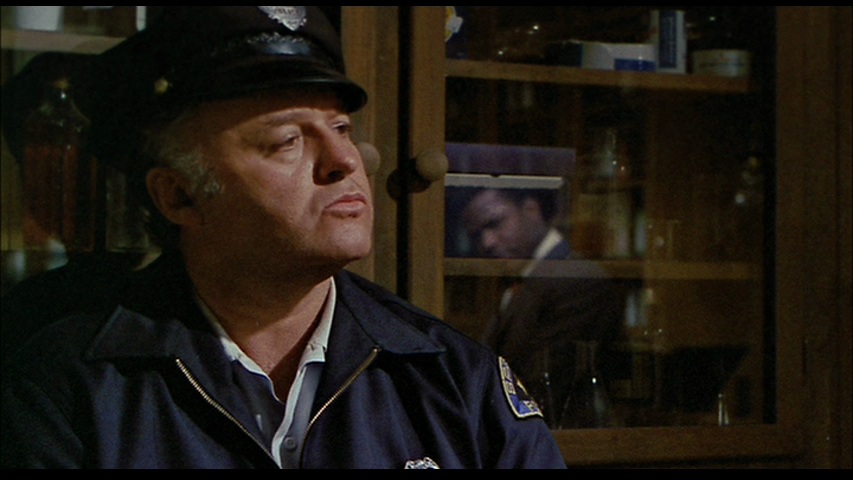
As "issues" movies go, In The Heat Of The Night ranks as one of the big ones. It may not have been the first of its kind, but it solidifies its place in film history by crafting moments of subtlety and nuance while also wearing its central issue proudly on its sleeve and never resorting to being maudlin. Every movie since its release that waves a flag for a cause or makes a political point has a direct line to it as an influence - even if many of them fall victim to excessive beating of their drums. So why had I not yet seen this classic? Aside from the fact that I can't see everything (dammit), it fell into that category of "well, I pretty much know the story...". Of course, that's rarely the case isn't it? Even if the plot points match up to what you expected, there's always all the bits in between to savour. A fine reason to keep doing these blind spots...
To narrow the field of potential pairings with In The Heat Of The Night, I looked for another issue film that could be considered as revolving around a central powerhouse performance. It's hard to compete with Heat's tandem headliners - Sidney Poitier as the Philadelphia detective stuck in a racist Southern town and Rod Steiger giving an Oscar-winning turn as the town's sheriff - but you could do far worse than calling on Mr. Paul Newman...His Oscar-nominated role in Absence Of Malice was one I had wanted to see for awhile, so it seemed a good double bill once you combine that with the film's focus on the power and responsibility of the press and legal system. Another trait both movies share is the way they jump quickly out of the gate. We're not even 15 minutes into Absence Of Malice and we know: that a union boss has gone missing and is presumed dead (the film was made only 5-6 years after Jimmy Hoffa disappeared - he wasn't even legally declared dead yet); the justice department has some suspects but is getting nowhere; they decide to focus their investigation on Michael Gallagher (Newman) since he is the son of a former criminal with ties to the suspects (and they hope to lean on him for information); a snoopy reporter named Megan (Sally Field) has discovered the investigation; the justice department lead on the case purposely leaked the investigation so that Gallagher would see it in the press; Michael is likely totally innocent and the story run in the newspaper will have assumptions and accusations leading to unjust consequences; etc. It's a pretty packed opening and the film expects you to keep up as it drops names right and left. It does essentially follow through with where you assume the plot will go - Gallagher does indeed suffer due to the leaked story as his union shuts him down, he loses customers and his closest friend Teresa (the also nominated Melinda Dillon) is pulled into the story - but manages to keep you guessing a bit regarding Gallagher's actual connections and Teresa's guilt over a secret they share. Field also keeps you guessing by oddly playing the reporter at different times as confident, flighty, defiant, meek, mouthy and sexy. It's not completely the actress' fault (though her performance just doesn't seem to fit at times) as the character's behaviour is a grab bag of possibilities. It certainly keeps you a bit off balance (particularly during the scenes between the two leads), but there's little likelihood that it was intentional. Newman for his part is remarkably consistent throughout as he plays Gallagher as stoic and very focused. Though he is initially upset at the paper and Megan for the fact-free reporting about him, he tries to settle into a moral compass for her. "You say someone is guilty, everyone believes you. You say they're innocent and no one cares." Her response shows he has some work ahead of him: "That's not the paper's fault, that's people."
As mentioned, In The Heat Of The Night also has a quick out of the gate start. Its plot is well enough known: Virgil Tibbs (Poitier) is passing through Sparta Mississippi, but while waiting for his connection gets pulled from the train station late one night by a deputy who is suspicious of a well-dressed black man. One of the town's wealthiest and most important men has just been found dead in an alleyway, so Virgil is brought in for questioning and is assumed to be the prime suspect ("How does a coloured man get that kind of money?"). Every person he comes across in the town has an immediate reaction to him and though finding out that he's a cop from Philadelphia may drop him from the suspect list, no one is jumping to extend a friendly handshake. Once his captain offers Tibbs' services to Sheriff Gillespie (Steiger) over the phone, the sheriff's own racism and demeanour towards the detective becomes situational - one minute calling him "Boy" and the next ordering his staff and the morgue to give Tibbs everything he needs. Gillespie is definitely conflicted since he needs to solve the case (the deceased Mr. Colbert was on the verge of socking even more investment into the town), but hates being shown up by a black man. Except for two people, the rest of the town see little use for Tibbs and stick with their initial assumptions (why change when you're comfortable?). Mrs. Colbert is one of those two and applies pressure to the sheriff and mayor to keep Tibbs as the lead investigator. Not only did he show her kindness while breaking the news of the murder to her, but he is also able to quickly surmise that a second suspect is also innocent. Unsurprisingly, that second suspect (a young man who took the dead man's wallet after the crime had been committed) is the other person who gives Tibbs some respect.
That's not to say that Tibbs is exactly respectful of all the townsfolk himself...One of the key elements of the film is that Virgil isn't a perfect human being either. He is well-educated, classy and does his job very well, but he also doesn't hesitate to look down on most of these Southerners. Sure he has good reason to carry that chip on his shoulder when he's treated this way, but it begins to interfere with his investigation and he starts making his own assumptions and looking for his own justice. Gillespie, though quick to anger and judgement himself, is also a smart man. The two of them push and pull for the entirety of the film and use each other's weaknesses. At one point when Tibbs has given up and decided to go home, Gillespie uses Tibbs' "holier than thou" attitude against him to convince him to stay by asking him how he could refuse a chance to make all these white people look stupid. There's a strong theme throughout of people showing their need to instill their own moral codes on others. Oddly enough, it's a theme that snakes through Absence Of Malice as well. The newspaper has little moral code of its own as shown by their lawyer (as long as they made a small effort to reach Gallagher or publish his denials, they can say whatever they want about him - if there is absence of malice then justice is served), but the DoJ have reached their own conclusions and need to get there no matter what. Even Gallagher (though he has pretty justified reasons as the film goes on) feels compelled to teach a few lessons to all the different players. In both films, no one wants to be reasonable. Which is somewhat the point - for many people their own moral code is justification enough.
Absence Of Malice tends to hammer home its points though. I've never considered Sydney Pollack the most subtle of directors and numerous scenes in the movie help reinforce that rather unfounded argument. Of note is Field's rather clunky delivery of "What are you saying?" to the lawyer that sets up his "absence of malice" speech. The final 10-15 minute scene in the U.S. assistant attorney general's office is both the best scene in the movie and one of its glaring faults. It's pretty great almost solely due to Wilford Brimley's reading of his AAG role as a disappointed parent getting his unruly children to tell him what they did wrong. But it exposes the faults of the film by stating its message a bit too clearly - don't rush to judgement, consider what truth means, it should be better to get a story right than fast and people can get hurt. Some relevant questions that ring true today for sure, but it's weakened by its method. Newman is also strong in that final scene though - both in how he quietly responds to questions and how he watches others without breaking his focus. One could argue that In The Heat Of The Night doesn't exactly shy away from stating out loud its own message, but both Tibbs and Gillespie are complex characters who contribute to the story's resolution without ever having to stand up and shout "Racism is bad!". It's much more powerful when you simply see that it's bad and don't have to be told. The film is probably best known for two moments when Tibbs stands up proudly for himself. The first is when he is condescendingly asked what them Northerners call him ("They call me Mr. Tibbs!") and the second when he responds to being slapped by the town's powerful cotton plantation owner. Poitier is on fire in both these scenes - that seething rage just under the surface of Tibbs almost makes you back away from the screen for fear of catching some shrapnel if it explodes. I can only imagine how this must have come across in 1967 because it's still pretty damn intense in 2013.
Neither film is overly showy with its visuals (both directors are much more focused on story and characters), but In The Heat Of The Night still takes full advantage of the great Haskell Wexler behind the lens. Shadows and shafts of light come into play and director Norman Jewison chooses his long shots judiciously to set scenes or show character relationships. The film is filled with talent - from the Ray Charles theme song (not a particularly great song in my opinion, but still...) to a great cast of character actors (Warren Oates, William Schallert, Scott Wilson, Larry D Mann, Anthony James - if you don't know the names, I guarantee you know every one of those faces). Hal Ashby hadn't started his directing career yet, but he won an Oscar for his work editing the film. In all, it won 5 Oscars including Best Picture - and that's in a year that also had Bonnie And Clyde, The Graduate and Guess Who's Coming To Dinner in the running for top honours. Not that Oscars are, by any means, a sign of quality, but Jewison's film makes a good standard bearer for that period. Absence Of Malice didn't quite knock 'em dead at the Academy Awards, but its 3 nominations (along with Newman's nod, Dillon and the screenplay got noms as well) weren't too shabby. If perhaps the screenplay didn't shine as strong as it could have, the film still casts a reasonably interesting story (with good doses of tension as we try to figure out what Teresa's secret is and how Gallagher's plan will roll out) and even manages to put a different context around what initially seems like a bad idea for a romantic plotline. Indeed both films manage to create solid contexts around their issues and bring to the fore the characters and the consequences. In particular, the consequences of basing your world view solely on what you see from your own pedestal.
Wednesday, 24 July 2013
TIFF 2013 - The First Tsunami of Titles
The heatwave has broken, the waters have receded and the weather was beautiful on Tuesday in Toronto. It's like the Toronto International Film Festival planned it that way so that everyone's good mood would be doubly enhanced when they made their first announcements for this year's lineup.
Of course, with expected selections being confirmed (by this point there are always numerous films that are shoo-ins for being at TIFF), how could any film fan not rejoice? But as usual, things only get better as you dive deeper into the list and start pulling out your favourite directors while also finding nifty surprises and a bunch of "never heard of that one before" titles (some of which can grab you simply on the basis of a single screenshot). I plan to see at least 40 films this year and I do believe I could fill my entire schedule just with what was announced today (I won't of course because the other programs always have treasures).
Big names abound with world premieres. All of the following directors have movies already slated to appear during the Gala or Special Presentation screenings (the only two programmes announcing so far): John Carney, Atom Egoyan, Stephen Frears, David Gordon Green, Nicole Holofcener, Ron Howard, Jim Jarmusch, Steve McQueen, Francois Ozon, Jason Reitman, Denis Villeneuve and Andrzej Wadja. Not too shabby. Even stars Jason Bateman and Joseph Gordon-Levitt will have directorial efforts in the lineup.
And yet, as much as I want to see pretty much all of their films, none of them make even my top 20 anticipated films from this first set. Here's what jumped out at me:
Attila Marcel (Sylvain Chomet) - Chomet's first live action film (after the wonderful Triplets Of Belleville and the even more wonderful The Illusionist) promises to meld Buster Keaton and Jacques Tati. Since they just happen to be two of my favourite artists ever, I'm overjoyed at this news.
Burning Bush (Agnieszka Holland) - I'm tempted to see Holland's look at the aftermath of a grisly government protest almost solely due to its 4 hour run time - the last couple of years at TIFF have provided a wealth of great loooooong form films (the 4.5 hour triptych Dreileben and the 15 hour The Story Of Film in 2011 and Kiyoshi Kurosawa's 4.5 hour Penance last year). Tempted, so tempted...
Blue Is The Warmest Color (Abdellatif Kechiche) - It's a contender for my list simply due to its Cannes win and some of the glowing comments I've heard about it.
Cold Eyes (Cho Ui-seok, Kim Byung-seo) - Korean action-thriller with high-tech cops and bank robbers. Yep.
Dallas Buyers Club (Jean-Marc Vallee) - Rejoice for there will soon be a new movie from Jean-Marc Vallee. If you don't know how I feel about his previous film Cafe De Flore then please give me an hour's worth of your time and I'll tell you.
The Double (Richard Ayoade) - Ayoade's Q&A after the TIFF screening of Submarine a few years ago alone made me a fan for life - he was dry, witty, self-deprecating, nimble and brought some of the biggest laughs of the fest during that post-film discussion. Oh, and I really enjoyed the movie too. So bring on the sophomore effort.
Exit Marrakech (Caroline Link) - A 17 year-old boy experiences a completely different culture while visiting his seldomly seem father. The scenario just seems to lend itself to some wonderful possibilities. And I'm a sucker for father/son relationship films.
Gravity (Alfonso Cuaron) - Hard to say if I'll catch this at the festival - it'll be a big release in the Fall anyway - but I'm curious as hell what Cuaron will offer up. I'm not a big 3-D enthusiast, but this could be something different.
The Great Beauty (Paolo Sorrentino) - Maybe it's because I recently saw La Dolce Vita, but a revamped view of a tired and possibly cynical journalist wandering through Rome's nightlife with all the beautiful people sounds oddly appealing.
Ida (Pawel Pawlikowski) - The gorgeous black and white screencaps on the TIFF web site for this film are reason enough to rank it high on my must see list.
Life Of Crime (Daniel Schechter) - It's called "Life Of Crime", it's based on an Elmore Loenard book and it stars John Hawkes, Jennifer Aniston, Isla Fisher and Tim Robbins. Yes, I want to see that.
Like Father, Like Son (Hirokazu Kore-eda) - I think the last few times I've mentioned Kore-eda in relation to a new movie by him, I've explained my anticipation by simply stating "It's Kore-eda!". I see little need to provide further explanation...
The Lunchbox (Ritesh Batra) - I had great luck with my 3 choices from India last year (which didn't even include what I heard was one of the best films of the fest - the 7 hour Indian gang epic Gangs Of Wasseypur), so even though this seems like a bit more of a gentle comedy/drama, I'm hopeful the streak continues. And since it stars Irrfan Khan, you can't go too far wrong...
Night Moves (Kelly Reichardt) - Again, another film I may or may not see at the festival...But I'm no less eager to see where Reichardt goes next. Each film has made her rise in my estimation.
The Past (Asghar Farhadi) - I'm one of the many that was completely captivated by the back and forth push and pull of Farhadi's amazing A Separation. You bet I want to see what he does next.
Quay D'Orsay (Bertrand Tarvernier) - I'm in the mood for a "gleeful political satire".
REAL (Kiyoshi Kurosawa) - I love Kurosawa's films and his use of sound to create dread and atmosphere, so when the words "frightening mindscape" are used in the description of his new film...Well, I'm beside myself with anticipation.
Under The Skin (Jonathan Glazer) - Glazer has been overdue for a new film and his stylish resume (2 films and some great music video work) has me eager to see what's been cooking - especially when Scarlett Johansson stars as a "voracious alien seductress" preying on solo travelers. This could be great fun.
Visitors (Godfrey Reggio) - The director of the Qatsi trilogy premiering his new wordless film with live accompaniment by the Toronto Symphony Orchestra performing a Philip Glass score? Wowza. And introduced by Steven Soderbergh. Probably going to be sky high prices, but I may have to make an effort...
We Are The Best! (Lukas Moodysson) - I tend to gravitate towards Scandinavian films at TIFF (and with a pretty good track record overall), so what better time to finally see my first Moodysson film? I'm way overdue.
Can't wait for the next batch of announcements! Fortunately TIFF will only release chunks at a time on a weekly basis - it'll give me time to replenish all the saliva I lost today from slobbering all over myself...
Thursday, 18 July 2013
Coincidental Parallels - "The Ninth Gate" and "Robot & Frank"
While perusing NetFlix the other day, I scrolled passed Roman Polanski's The Ninth Gate and then backed up to bring it into view again. I don't know if it was the urge to start diving into Polanski's, uh, middle years (I hadn't seen any of his films between The Tenant and Ghost Writer - a gap of about 35 years) or simply to see Johnny Depp without scads of makeup and CGI, but I decided to dive right into it.
A good decision as its a pretty fine thriller and was exactly what I was looking for that evening. The following day I stopped by my fave local video store Videoflicks (yes, I still frequent actual physical video stores) to catch up on some titles missed in theatres. I came home with Dragon, Dead Man Down and Robot & Frank. The last of those was my most anticipated since I liked the concept and had heard strong reviews. Turns out it was pretty damn good with Frank Langella giving an outstanding performance as a thief whose memory is slowly fading. He gets some healthcare assistance from a robot and turns it into his partner in crime.
Langella being in both films back to back was a great happenstance, but it was a bigger coincidence that caught my attention...
In Polanski's film, we learn early on what kind of man Johnny Depp's book dealer is as he undervalues a rare 4 volume set of "Don Quixote" and buys it. He walks away with an incredibly valuable tome for a pittance.
In Jake Schreier's Robot & Frank, Langella's old timer is an avid reader who loves to acquire armfuls of books at a time from the local library (though it's hard to say if the fact that Susan Sarandon also happens to work there actually trumps his desire for new things to read). On one visit, as he worries that the books are being replaced by new technologies, she shows him one of the building's most prized possessions. She unlocks a small glass encased box and pulls out a rare and incredibly valuable copy of..."Don Quixote".
Coincidences should be expected, but it's still pretty satisfying when you find them. Think I'll go rewatch Lost In La Mancha now...
Tuesday, 16 July 2013
Not that anyone took the MPAA seriously before, but...
Right at the very end of William Friedkin's memoir The Friedkin Connection comes a short discussion of the MPAA's rating of his most recent film (the greasy Killer Joe). The following passage covers the appeal submitted by Tracy Letts (the playwright and screenwriter) and the producers:
Then Tracy spoke for about five minutes trying to persuade the board that our film was not exploitative; the violence and sexuality were part of the fabric of the lives of his characters. He felt frustrated and humiliated having to justify his work. "It wasn't about anything specific in the movie" he told me. "It was the movie itself. They objected to it in total." At one point Tracy said to them: "It's like we're being punished for doing this convincingly." Their response was, "The fact that the violence was personalized is definitely one of the reasons." Tracy asked, "In other words, if the violence was depersonalized it wouldn't bother you?"
"No, it wouldn't", they said. "If this was just some guy dying, like in Saw, we wouldn't care."
Tracy felt their decision had already been made but he said. "Because we've given these characters depth and the actors play them well, you feel we deserve an NC-17." Their answer was "Yes." The board took twenty minutes to uphold the rating, unanimously, 13 to 0.
Whether you think Killer Joe deserves an NC-17 rating or not, that is some ridiculously terrible reasoning right there.
Subscribe to:
Posts (Atom)