Tuesday, 15 November 2011

TIFF 2011 - Oslo, August 31st


Chip Lary from Tips From Chip is doing a series of reviews of films with numbers in their titles - starting at zero and working his way up. When I suggested Joachim Trier's latest film "Oslo, August 31st" as a possibility he asked if I could review it for his site. Given that it was one of the many strong films I saw at TIFF this year that I had yet to review, I agreed - sometimes I simply need a kick in the butt and a deadline to get moving on overdue reviews (my wife might want to generalize that statement somewhat...). So here's the review I wrote for his site (which he just published yesterday):


Though I don't completely subscribe to the "Auteur" theory in all its finer points, I do tend to look at films as having directorial stamps on them - not just from common stylistic points of view or as vehicles that cover similar themes, but as works that have a certain quality about them. For example, when I see a movie like Joachim Trier's debut film "Reprise", I take note of the name of the helmer because there's a certain something about the film that appeals to me and an attention to detail that shows the person "in charge" cares about the entirety of the work. So when I noticed that Trier's second film "Oslo, August 31st" was to screen at this year's TIFF, it immediately made my short list. It's a very different film than its predecessor as it was shot quickly, for little money and eschews the many flourishes and stylistic touches of his first film. However, it still fits nicely next to "Reprise" because there is not only a deft touch with its characters and a strong sense of place, but also an overall confidence about its story.

Based loosely on the French novel "Le Feu Follet" (which Louis Malle turned into the 1963 film of the same name - better known to English speakers as "The Fire Within"), the film shows a day in the life of one particular troubled person, but it also illuminates an entire city at the same time. The very beginning of the film shows home movies of a still smallish Oslo, but in the present day the city seems to be growing quite nicely as many cranes litter the streets signifying new construction. As Anders wanders from friend to job interview to his family's old house, we get to see a large chunk of a lovely, restful city - a stark contrast to Anders himself. You know that friend you have that just can't seem to get it together? While everyone has their ups and downs, this one particular person always seems to be in the worst shape (or at least that's what they tell you)? That's Anders. He can't pull himself together and has already tried to kill himself once while in rehab. "I've always thought happy people must be morons" is one of Anders philosophies and gives a good indication where most conversations with him will likely lead.

Those conversations are key to the success of the film - each one feels natural, genuine and very real. Particularly those between Anders and his best friend who listens to him intently and tries to engage him, but is at his own crossroad. Anders is not the only one struggling to find his place in life, but he just can't see past his own current problems or even allow anyone else to. He scuttles a job interview that was going well as soon as his drug history arises. The interviewer seems sympathetic, but Anders can't even consider that he might catch a break. Instead of suffering rejection, he slams the door shut himself (a tactic he seems to use extensively across all relationships). Throughout the day, there are also kernels of optimism and hope - a young girl in a cafe makes a "bucket list" with her boyfriend, a late night swim with laughter, watching and listening to different people go about their day - there's plenty of opportunity and promise in these lives. But Anders has lost that ability to find any of it. He can hang on to memories and images from his past, but that's all they are now and they provided no solace, nor encouragement.

At a Q&A after the film, Trier talked a bit about the idea behind the production process which was to do it simple and fast. As other plans were taking their time to get off the ground, he and his creative team decided they just needed to get out and start filming with a shooting ethic that used as many locations and their natural environment as possible. Also, they needed to work with actors that could take scripted dialogue and turn it into realistic moments of conversation. It's exceptionally effective as it keeps you close to Anders, makes you want to point out all the possibilities around him and frustrates you as he turns away from every single one of them. I can't wait to see what Trier does next.

Saturday, 5 November 2011

A Short Video Summation of an October of Horror


As a final wrap-up of my October horror viewing spree, here's a short compilation of scenes from each movie I watched (2 clips from each film not including the bonus snippets at the end):


Friday, 4 November 2011

A Single Image #20


The Highest (1973 - Arthur Penn)

from the anthology film Visions Of Eight

Now that's some good spam!


The lovely and talented Jandy - one of my co-writers at RowThree where I occasionally also post - emailed a few us the following comment that was left in pending status on the site. It's spam, so I have no qualms about re-posting it here (it contained the same link dropped in at random about 4-5 times in the content).

It's obviously been jammed through some kind of translation bot, but feels like it may have actually come from some person's actual top 6 list of mermaid movies. Parsing out any of their thoughts will be challenge though...However, since this translated version (which was posted with their spam site links included - I won't include them here, but have highlighted where they were in the comment in blue - to a RowThree post about a pair of disaster movies) is filled with enough wonderfully surreal catch phrases to keep me going for a year, I thought it might be fun to share. Feel free to re-share at will.

And maybe one day you too will memorialize how delighted you were when this first came unconfined...


Most people have seen Disney’s “The Little Mermaid” animated movie. But there are not too others which are absolutely magic – classics. Here they are:

1. My lid pick exchange for a mermaid film is “Smudge”. Not alone is it comic and the cabal wonderful, but there is quite a hint of breathtaking footage of Daryl Hannah mermaiding in the ocean. We can’t grow sufficiently of that! Preserve continue in haul that this is not a children’s movie. It was made in the ’80s, and in spite of the most quarter it is okay because the progeny to watch. But there is a little moment of nudity (when the mermaid is walking into New York discernible of teaserthe ocean with nothing but her great whisker to cover her) and there is some implication of what she and the Tom Hanks characteristic untypical are doing in the elevator, but nothing is shown. The flicks is wonderful, with a leading excuse and formidable mermaid footage and lots of laughs, as fount as a capacious romance.

2. My second top ideal is “The Arcane of Roan Inish”. This is a safe, tranquillize flicks the entire family can enjoy. It was made in Ireland, and as such is slower and quieter than most American movies. It is beside a lilliputian Irish lass who moves to busy with her grandparents. While there she unwittingly stumbles upon the obscurity circumambient the key the dearest adapted to to existent on, called “Roan Inish” (Island of the Seals). As she slowly solves the puzzle, she brings movie trailershealing and concordance without hope to the family. In this film the untrue myths non-spiritual luxuries is a selkie, not a mermaid. The selkie lives in the aspect of a seal. On advantage she climbs up on a poverty-stricken and removes her seal scrape, revealing a pleasing woman. So this film is a trifling tittle special, and you desire at no time look at a seal the despite the fact mo = ‘modus operandi’ again.

3. My third favorite mermaid movie is “Aquamarine.” This equal is geared to the teen crowd. It has nothing lascivious, so the whole parentage can take to it. It’s a delightfully another rendering of the classic Tiny Mermaid story, with a wonderful shock ending. The mermaid in this big is unusual, more like a regular teen girl. There are a sprinkling suitable shots of her in the water. The messages in this silent picture are elevated quality, such as loyalty, friendship, exclusive conviction, selflessness and courage. And it is also sheer funny.

4. Handful four of my top mermaid movies is an familiar black and drained deathless called “Mr. Peabody and the Mermaid.” You intent should prefer to a object to finding this silver screen to watch, but VHS versions are ready for mark-down on Amazon.com. All of the underwater footage was filmed in the venerable Weeki Wachee Springs in Weeki Wachee, Florida, no more than a year after this underwater theater opened. Made in 1948, this moving picture is nearly a married span charming a vacation in the trailersCaribbean. The humankind is almost 50 and is having a mid-life crisis. While on vacation he accidentally fishes up a live mermaid from the sea! Ann Blyth plays the entrancing mermaid and you transfer enjoyment this wonderful film. The no greater than objections a parent might include is the exercise of extramarital flirting, and some laughable scenes with a guy disquieting to give up smoking.

5. United that is a dab dissimilar, and which only recently came out, is a Japanese anime Miyazaki talking picture called “Ponyo on the Cliff alongside the Sea”, or sparely “Ponyo”. In this whole the fish-girl is depicted as a goldfish with a generous gall, which is rather strange. But in an singular contort, this five-year-old fish-girl has to engage the teeny five-year-old somebody little shaver to fondness her faithfully, or she will turn into sea sparkle and be no more. It is such a sweet interpretation, these inconsequential children knowledge to love and trust each other in such an undefiled way. It is a story of wonder and daring and should not be missed.

6. My pick for the duration of handful six is Disney’s “The Petite Mermaid”. It was the talking picture that got Disney backside into the in favour film business again in the 1980s. The music and white are a delight. I memorialize how delighted I was when it first came unconfined – it is a diverting mermaid movie, high jinks for the whole family.

Wednesday, 2 November 2011

October Horror 2011 - Chapter #8


Yeah, I'm surprised October's over too. 32 horror films in the month is my final count - a 33% drop from last year's total. I blame Toronto After Dark for keeping me busy...

The last four for the month:


The Shiver Of The Vampires (1971 - Jean Rollin) - It's quite surprising that it's taken me so long to get around to seeing one of Jean Rollin's art-horror films - you'd think this stuff would've been right up my alley. And indeed, it most certainly is. For whatever reason, I just never thought to dive into his output until one of his titles pretty much randomly came up in my lengthy list of items to investigate. In this case, the horror derives almost strictly from images - not sound, not story, not character and not slow builds of tension. It's all about the visuals. The bright colours mixed with neutral tones, the bits of bright blood red dotting the frame, the creepy statues and artifacts littering the castle, the faces of the undead vampires and the surprising places they can be found. The camera plays its own part occasionally as when it spins around inside a circle of all the characters or becomes the POV of the doomed central character. The nominal story has a newlywed couple visiting the bride's favorite cousins in their castle. Unbeknownst to her, these vampire hunters became the hunted and now must put up with eternity. The main female vampire (who converted the cousins) slowly pulls the bride over to "her side" as the hapless husband can do nothing. Throw in a large portion of nudity, gothic outfits and a psychy soundtrack (a slightly twangy low rent version of Goblin - the great band who did the soundtrack to "Suspiria", "Deep Red" and other Argento films) and you've got yourself a memorable picture.


Two Thousand Maniacs (1964 - Herschell Gordon Lewis) - As a director, Lewis wasn't exactly known for his specific style, storytelling ability or his way with actors. I think even he would say that he wasn't so much a filmmaker as he was a businessman. By pretty much any account, "Two Thousand Maniacs" is a terrible, terrible movie - the acting is atrocious, useless dialogue scenes go on and on and the whole thing looks completely drab. Except for the blood (primarily what Lewis is known for via both this film and "Blood Feast") which was bright and vivid. The idea was to shock with scenes of dismemberments and other such gore-filled activities and in this movie's case, they certainly had a structure that leant itself to such requirements. One hundred years after an entire Southern town has been wiped out by the North during the Civil War, it suddenly reappears and their "centennial" celebration is focused on finding some sacrificial Northerners to kill at their festival. It's a different spin on Brigadoon and as an idea certainly isn't the worst one for a gorefest. The odd thing is that it isn't filled with as much chopped up flesh as you would expect (of course, in 1964 it was rather infamous for a few scenes of severed limbs). It's not that I necessarily wanted or needed to see more gushing blood, but when that's all your movie has going for it, that's all you can hope for.


Doctor X (1932 - Michael Curtiz) - After seeing this two-strip technicolour film, I can't help but wish that someone would revive this old technology and make some new films with it. The green and yellow colour palette in this case worked tremendously well for the tale of a group of scientists who are under suspicion for a recent string of murders. Specifically, any scene in one of the wonderful laboratory sets - rife with flashing lights, liquids flowing in tubes and bizarre electrical contraptions - looked fantastic with that mix of two tones and all the shadows they could find. Doctor X is the head of the school where the scientists do their research and he convinces the police to let him conduct his own investigation with his own experiments to clear his fellow professors' names. The mystery is well handled, there are several good scenes that build up suspense and it's overall quite fun, but sadly it's marred by the comic relief of the newspaper reporter. Every line and every word has to be said with smarm or as a "zinger". It completely takes the steam out of anything built up previously. Overall it's good - averaging between fantastic and annoying.


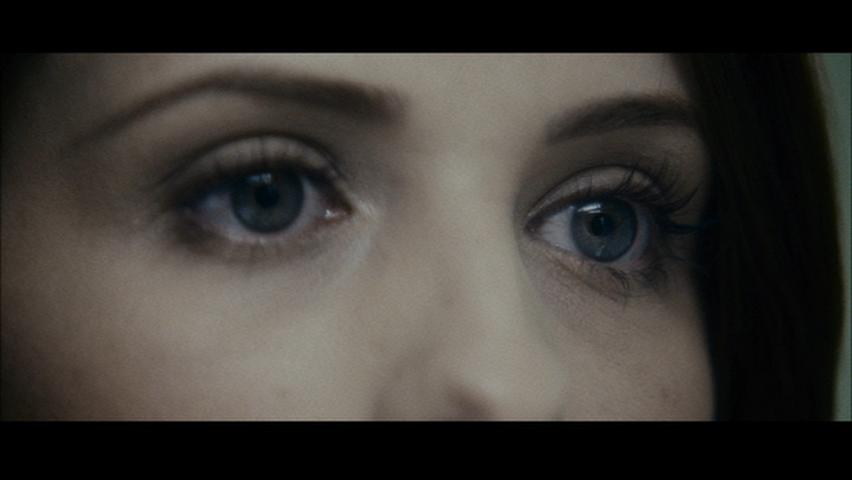
The Return (2006 - Asif Kapadia) - I don't remember much about the response to the Sarah Michelle Gellar vehicle "The Return" from 5 years ago, but I'm pretty sure it wasn't overly positive. That's a bit of a shame since this was a pretty effective supernatural thriller. Oh sure, the story doesn't really go anywhere overly different than any other "why am I having these visions of someone else's past?" movie, but it does it with (for the most part) striking visuals and a very patient approach. There are several long moments of silence and a mostly tempered soundtrack that helps keep you concerned for Gellar's character as she feels a strong pull to return to her native Texas. There's a car crash in her past, but she is also increasingly disturbed by images intruding on her reality from a place she's never been. It falls into a few of the standard traps, but resists going for too many easy scares by relying on the audience's empathy with the central character. One major issue with the film, though, is its use of the sudden zoom effect - you know the one where for no reason at all the camera seems to lurch forward like there's some auto-correcting zoom feature? It's used enough in the film to be extremely distracting and somewhat infuriating. It makes sense (to a certain extent) when being used in faux-documentaries to ape a cameraman trying to figure out the right shot and framing for something happening in front of them, but it's completely nonsensical to use in a film like this. Sometimes a single bad choice like that can ruin an entire experience, but fortunately there's enough in the rest of this film that allows me to overlook that glaring misstep.


Sunday, 30 October 2011

October Horror 2011 - Chapter #7


Here's a sneak peek at the last batch of horror films from my month long bender (which will fall far short of last year's number due to Toronto After Dark switching back to October):


The Deaths Of Ian Stone (2007 - Dario Piana) - Though I haven't seen many of the "8 Films To Die For" series (otherwise known as the "After Dark Horrorfest" which shows its independent films over an eight day span in nationwide theatres), I haven't heard a whole lot of positive response to any of the films even though last year's fest was the fifth one. However, the concept for "The Deaths Of Ian Stone" sounded too good to pass up: the titular character dies every night only to wake up in a completely different life. Promising stuff that could go one of any number of directions. Unfortunately it chose one that abandons its premise early on for life sucking ghostly monsters that can take human form. Worse than that though, its main character is just simply unlikeable. Even worse, he's just boring. As is the set of CGI-heavy effects of people turning into these black death spirit thingies. When he suddenly wakes up in a new life, Ian Stone has no recollection of his previous one so it just changes the situations within which this bland unsympathetic character exists. How exciting is that? Whatever rules the story had are shuffled to the side and it becomes generic in its rush to redeem Stone. If this is representative of the "8 Films to Die For" series, I can see why I haven't seen overwhelming response to it (though you'll see shortly, it isn't completely representative).


The Mask Of Fu Manchu (1932 - Charles Brabin) - Now here's an interesting artifact of the early 30s...Filled with great set design, interesting shot selections and a whole lot more torture than you might expect, the film also engages in some of the worst casual racism that side of "Breakfast At Tiffany's". It's not just the indiscriminate references to "the yellow man" (after all, Fu Manchu throws it right back at them with his hopes to eradicate "the white man"), but the thought that Asians think of nothing else but to rule the world. While the British wish only to find Genghis Khan's old artifacts to preserve them in a museum (even though they break into his old chambers with nary a thought to its preservation), Fu Manchu and his "hordes" want them so that they can convince the rest of Asia to follow them into world domination. When the Brits discover that this is the plan, they double their efforts to get there first. They do, but Fu Manchu has several devious plans up his sleeve to get them back. Possibly the worst moment of all was the patronizing comment from the wealthy English archaeologist to a Chinese waiter congratulating him for not aspiring to anything more than what he was and avoiding the fields of medicine, science and exploration. Perhaps I was reading the film wrong, but aside from some of the great visuals the story didn't have much else to hold it together, so I had to focus on something...


Private Parts (1972 - Paul Bartel) - This randomly selected title was quite the fine little surprise. Directed by Bartel (probably best known for "Eating Raoul"), it focuses on horrors of a more psychological nature - specifically those that arise from one's sexual urges. Young Cheryl is a runaway and ends up at her Aunt Martha's hotel looking to bum room and board for as long as she can. Her combination of naivete and curiosity about using her sex appeal is a concern to Martha (played by the great Lucille Benson - look her up, you'll know her) who will not stand for any of those "painted women" in her hotel. She also likes to frequent funerals in order to see the spirits of the dead rising heavenward. As much as Cheryl tells Martha not to worry, she can't help flirting with handymen until her attention focuses on George the photographer. He's a rather strange bird who has his own ideas about sex (confused as they may be) and one hell of an interesting photo studio. Cheryl works herself into rather dangerous predicaments while Martha attempts to keep her building pure. Battle lines become drawn and the final confrontation gets set. Like many of the horror films from the 70s, though, the curve balls are always ready to be thrown. Not just at the end either - you never quite know where things are headed at any point in the story. Bartel does a great job of pacing things out and keeping you always a bit off centre. If the acting is slightly dodgy at times, it's never overly distracting and doesn't take away from one of the more interesting horrors of the early 70s.


The Abandoned (2006 - Nacho Cerda) - While at the Toronto After Dark festival this year, the title of this film came up a couple of times - mostly due to the fact that one of its writers (Karim Hussain) was quite involved in the anthology "The Theatre Bizarre" that played the fest. By sheer coincidence (or was it...), I happened to stumble across the DVD of it at a charity sale in our office building a few days after hearing about its underrated status. So I snagged it for a couple of bucks and tossed it in the player. It was only then that I discovered that it was another of the "8 Films To Die For" series (though from a different year than the aforementioned "The Deaths Of Ian Stone"). The disillusionment set in, but I decided to press forward. Fortunately, it didn't take long to assuage my nervousness. First, it's a gorgeous looking film whose predominant greens and blues still cover a broad spectrum. Secondly, it is creepy as all get out. It centres around Marie - a 40-ish successful business woman who has returned to Russia to learn more of her roots after being abandoned by her parents as a baby. She travels to the old house of her parents and finds that not only can she not leave, but that her twin brother has also come to the same spot. As they encounter ghostly presences of themselves and piece together what happened years ago, they wonder if they have been summoned back in order to be finished off in the manner they should have been years ago. Even though there are few characters here, it is highly effective in pulling you deeper into Marie's predicament and dreading each new entry into a darkly lit place with a flashlight. After remembering that the "8 Films To Die For" also ran "Reincarnation" (the terrific film by "Ju-On: The Grudge" director Takashi Shimizu) and discovering that "The Broken" (a rather spiffy little thriller by Sean Ellis) was also part of it, I may just be turned around on the idea. But then I think of "The Deaths Of Ian Stone" and I reconsider all over again...


Toronto After Dark 2011 - "Father's Day"


"Father's Day" is pretty much the perfect exploitation film. It will offend many with its graphic images and content (both bloody and sexual) while it embraces the anything-goes aesthetics of many of the films from the 1970s that range from impressively realistic gore to ridiculous use of stock footage. Its plot begins with a search for a serial killer and from there mutates with a speed and force rarely seen outside the viruses found in bad sci-fi movies. Strippers, priests, male prostitutes, bears, chainsaws, hallucinogens, demons, a visit to Hell and probably even a kitchen sink or two are smashed together, blended until each has been reduced to gooey chunks and then splattered back up on screen with a joyful exuberance. It's sick, gory, disgustingly gross and very, very funny.

However, let me be very clear up front: The opening 10 minutes of the film is extremely nasty stuff and enough to thoroughly repulse just about anyone but the purest of gorehounds. A rapist of fathers (it's explained that he doesn't like woman, but never stated why he only goes after the Dads) is on the loose and we join him in the middle of a particularly, um, gruesome violation of another human. Having seen the faux-trailer for the film last year (which led the Canadian filmmaking team Astron-6 to make a full version of the film for the folks at Troma), it wasn't really a surprise - that trailer is full-on Grindhouse at its ickiest - but that first section began to validate my fears that the movie was going to be completely in that same vein. A strange thing happens after a few minutes of this type of gore though - it's pitched so way over the top that you can't actually take any of it seriously and it becomes more of a parody than anything else (though a disgustingly Lurid one).


Of course, nothing remains very stable in this movie for long. Even though a team of three band together to stop the evil Fuckman (yes, occasionally they stoop to juvenile humour), the father raping aspects of the plot mostly disappear. Not only was this rather welcomed, but it also fits right into the standard templates of the exploitation films - how many were actually faithful to their original concepts by the time they had run their course? There's still loads more bloodshed and what you might call "vivid" images, but once the humour kicks in it all meshes into somewhat of a thank-you card to these grindhouse style films. The actors (most of them members of the Astron-6 team) occasionally go for big emotional moments or speak in halting ways just like the "bad" acting that is associated with the genre, but it's obviously on purpose and isn't used to the extent that it becomes tiring or a single joke. They actually stay in their characters, have subtle well-timed comedic moments and never wink directly at the audience. Combined with the visual riffs on the genre (obvious rear projection footage during an explosion, etc.) and a willingness to change the plot almost on a whim, the film starts to pile laughs on top of absurdities on top of laughs on top of absurdities.

Which is why a description of the plot is relatively pointless. If you want to hear about where the story goes before deciding whether you want to see the film, you're approaching this particular movie all wrong. The Astron-6 folks have put together a loving tribute to 70s exploitation films that careens with controlled abandon across the genre's tropes, styles and limitations while never losing sense of the fun. Or the goo.